ByJohn A
The Anatomy of a Pooja Temple for Home, from Base to Shikhara
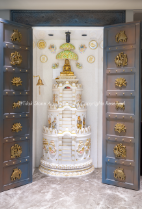
A pooja temple for the home is more than a place to keep idols. It carries the weight of daily prayer, family memory, and quiet moments that shape a household. When you look closely at a marble temple, you start to see it as a structure with parts, each one built for a reason. A well-made pooja temple for the home follows an order that goes from the ground up, and every layer has a job to accomplish.
Most people buy a pooja temple for home without knowing what they are looking at. They see a pretty white shape and pick it. Perhaps that works for some. But if you understand the parts, you make a better choice, and you avoid regret later.
Let’s break it down.
The Base: Where a Marble Temple Begins
The base holds everything. It is the foundation, and it takes the full load of the structure above.
A good base sits low and wide. This gives the temple balance so it does not feel top-heavy or unstable. In white Vietnam marble, the base often carries small carved detail along its edge, though not so much that it competes with the upper sections.
Here is why the base matters more than people think:
- It decides how steady the whole temple feels.
- It sets the height of your idols for comfortable darshan.
- It protects the lower idols from floor-level dust and water during cleaning.
Think about where you will place the temple. A base that is too tall makes daily aarti awkward. One that is too short forces you to bend. You want your hands to reach the idols without strain.
See also: Why Simple Label Designs Can Be More Cost-Effective
The Platform and Pillars: The Working Body
Above the base sits the platform, the flat space where idols rest and where you place your lamp, flowers, and offerings.
This is the part you touch every single day. So the stone here needs to be smooth, easy to clean, and strong enough to handle oil, ghee, and water without staining fast. White Vietnam marble suits this well because of its fine grain and even white tone. Some call it Swiss white marble or super fine white Vietnam marble, but it is the same material, valued for its purity and finish.
The pillars rise from the platform. They frame the idols and hold up the roof section. Good pillars do two things at once:
- They carry weight from the dome above.
- They create a sense of a doorway, a threshold into sacred space.
Carved pillars change the whole feel of a temple. A plain pillar looks modern and clean. A carved one feels traditional and rich. Neither is wrong. It depends on your home and what settles your mind when you sit for prayer.
The Dome and Arches: The Middle Ground
The middle section connects the working body to the crown. Arches curve between the pillars, and the dome starts to take shape.
This part is where craftsmanship shows the most. The arches need to match on both sides, and the carving must flow without breaks. When artisans get this wrong, the eye catches it right away, even if you cannot name what feels off.
A white Vietnam marble temple handles fine carving well. The stone is dense, so detailed work holds its edge over years of use. That matters, because a temple stays in the family for a long time. You do not replace it every few years like a piece of furniture.
The Shikhara: The Crown of the Temple
The shikhara is the peak. In temple design, it points upward, drawing the eye and the mind toward the sky.
This is the most recognisable part of any temple, big or small. In a home temple, the shikhara might be a single tapered dome or a layered tower with small repeating shapes that rise to a point. The top usually ends in a kalash, the pot-shaped finial that marks the highest point.
The shikhara does something quiet but real. It tells you, without words, that this space is different from the rest of the room. Your eyes travel up, and something in you slows down.
A few things to check on the shikhara:
- The taper should feel smooth, not sudden.
- The kalash should sit straight and centred.
- The carving should match the style of the base and pillars.
Reading a Temple As a Whole
Once you know the parts, you can judge a pooja temple for home in a minute. You look at the base for stability. You check the platform for finish. You study the pillars and arches for even carving. You follow the shikhara up to the kalash.
A temple that gets all four parts right feels calm to sit in front of. One that rushes any part feels slightly off, even if you cannot say why.
White Vietnam marble carries all of this well. Its even white surface shows carving clearly, holds detail for years, and stays cool and clean under daily use. That is why it works from the base right up to the shikhara.
Next time you look at a marble temple, do not just see a white shape. See the base, the body, the middle, and the crown. Then you will know what you are really bringing into your home.